Envisioning flexible browse and booking for 200M+ Delta Air Lines flyers
Innovation & Product Design @ Delta Air Lines
Team
Intern passion project
Timeline
2 weeks, July 2025
What I did
Strategic Design, Cross-Functional Collaboration, Vision and Scoping, Critical User Journey, Wireframing
Impact
Drove cross-functional conversation across revenue, data, and engineering
Pitched to and loved by senior leaders!
00 overview
What is flexible search?
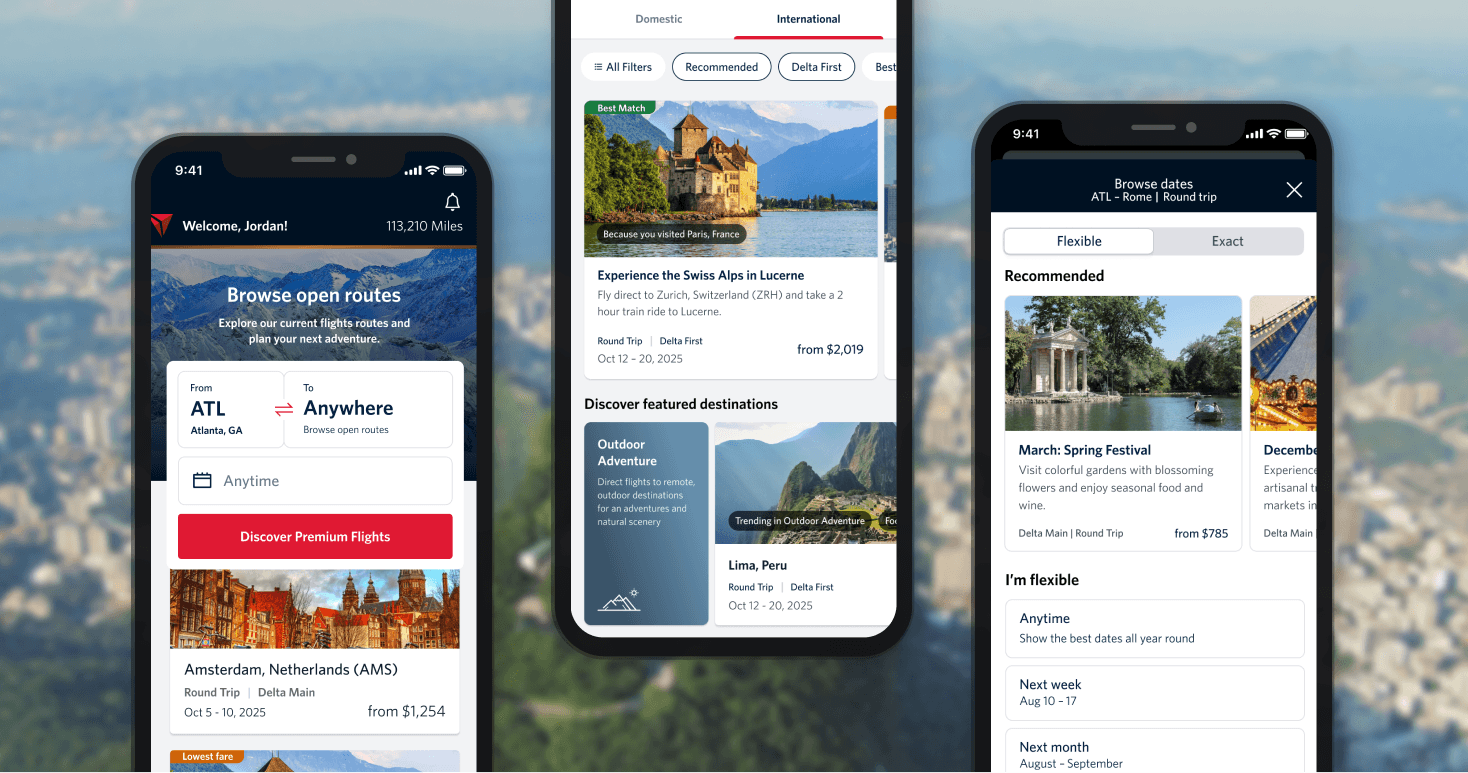
I created an end-to-end design and strategy that can be encompassed by the following vision:
Flexible Search is an exploratory search experience that makes booking feel seamless, personalized, and exciting for hesitant “browsers” and helps them become confirmed travelers
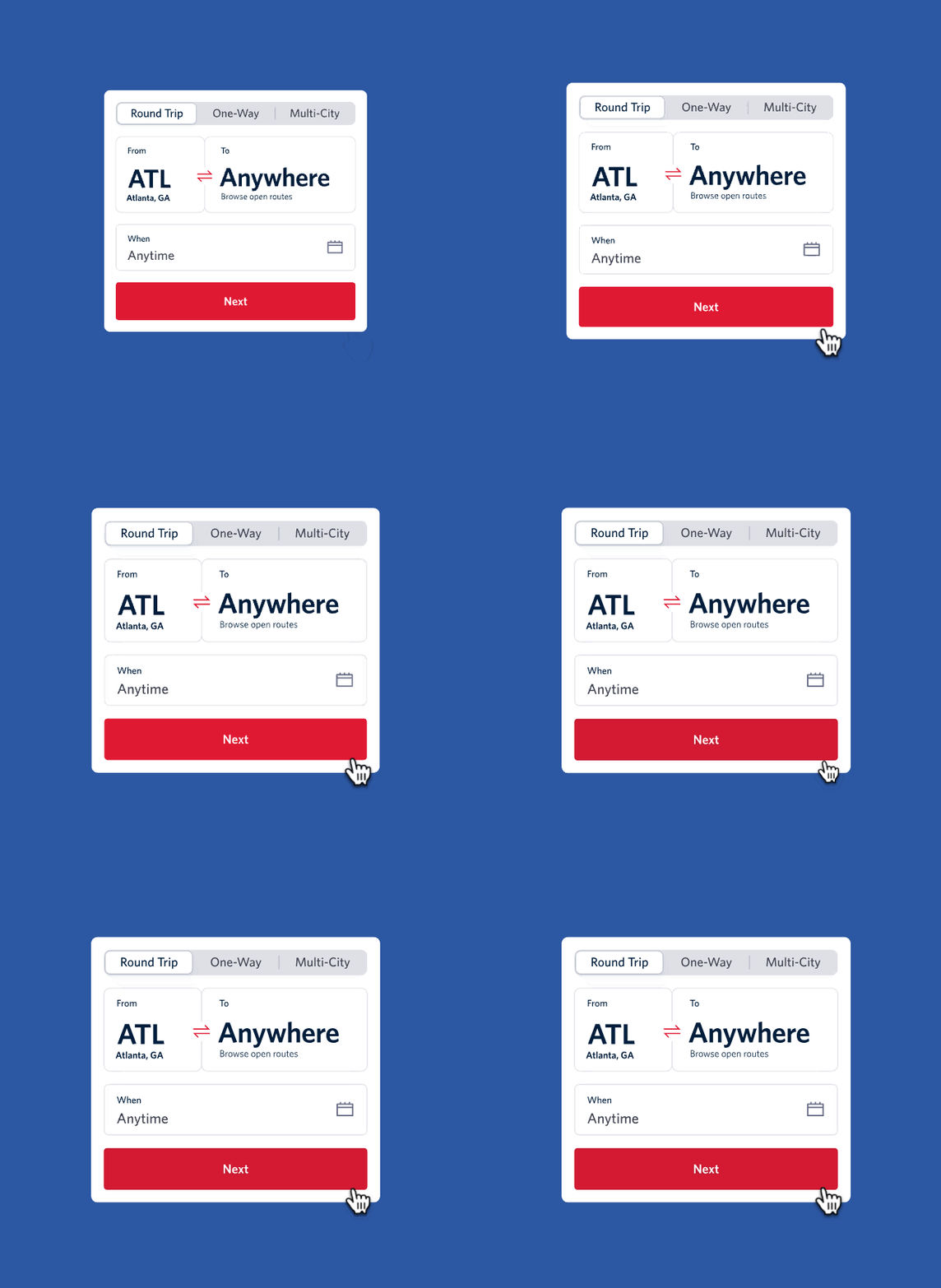
Go anywhere, whenever
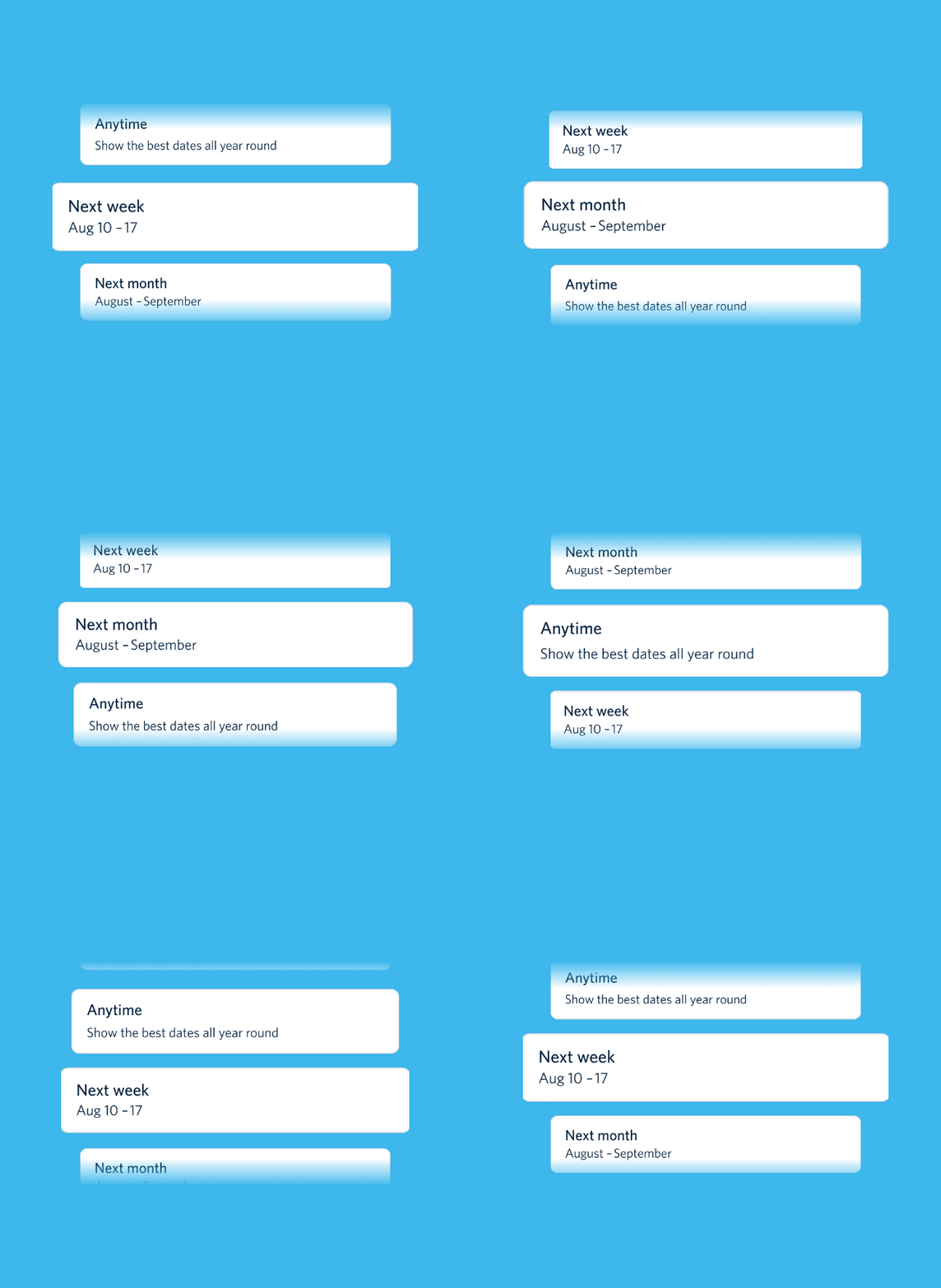
Browse with flexible dates and times

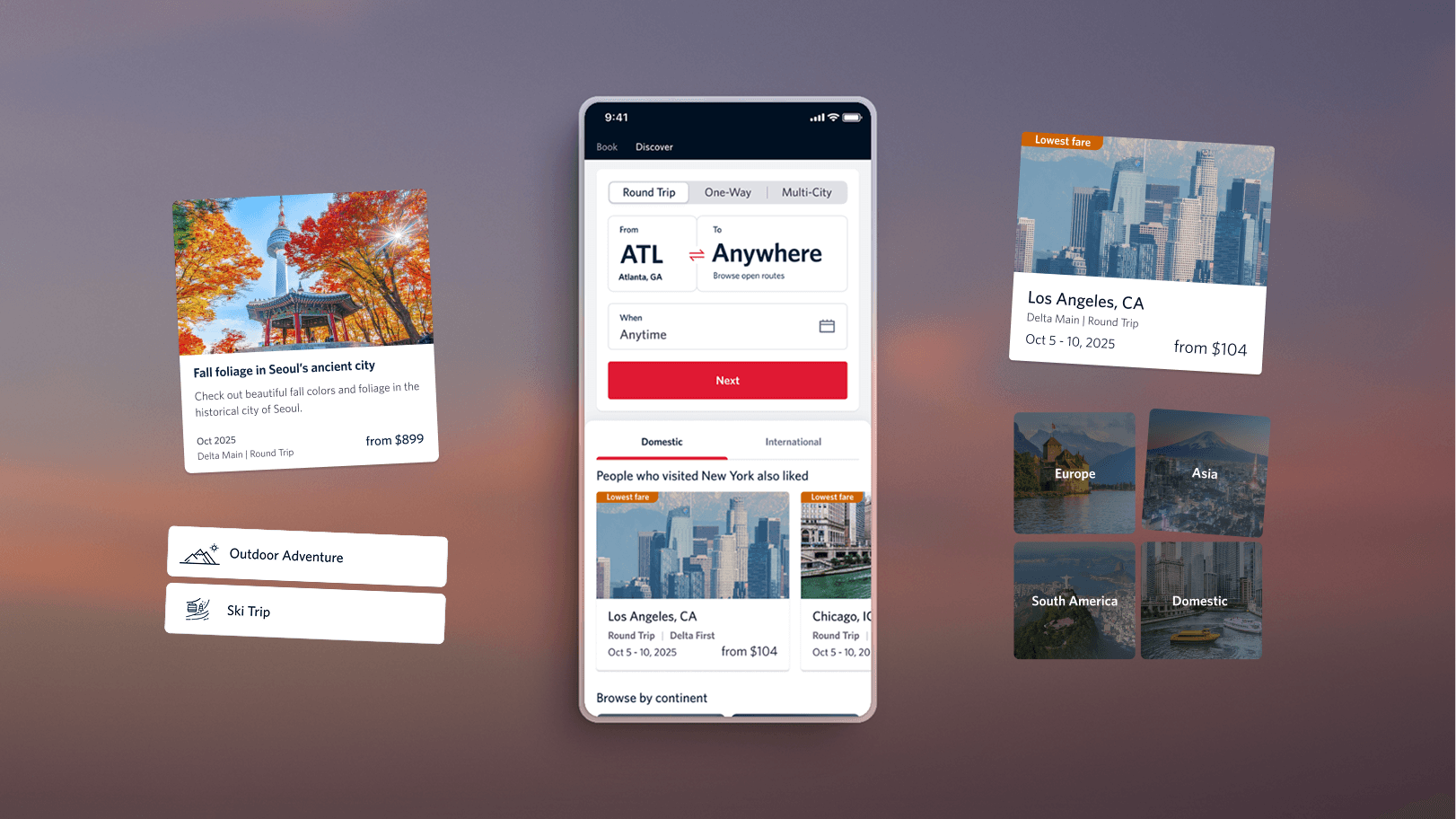
Personalized search results
Envisioning end-to-end solutions for an outdated and complicated feature
As the innovation design intern, I identified core opportunities in the current search and browse ecosystem in the Fly Delta app and Delta’s web booking feature and delivered solutions aligned with the company’s strategic innovation roadmap.
I pitched my proposal near the end of my internship and secured approval from the managing director. My pitch also received positive feedback up to the VP level.
01 why tackle search?
PROBLEM #1
Unintuitive discovery flow
Current offerings on Delta dot-com such as “Current Flight Deals,” Flexible Dates calendar, and “Deals and Destinations” are not yet available in FlyDelta and integrated seamlessly into the customer journey.
PROBLEM #2
Losing conversion to external booking platforms
A significant portion of bookings come from external platforms, even for loyal customers and members.
"I just always made flight reservations with other online platforms. "
– Jessica (SkyMiles Member)
"I fly Delta, but usually just book through Hopper."
– Elyse (Non-Member)
PROBLEM #3
Search in the age of AI and personalization
Search interfaces are rapidly evolving in the age of AI. Users use search and natural language interfaces and expect to see the best results for them. How might Delta evolve to meet the needs and expectations of future customers?
Why search?
02 design decisions
DECISION #1
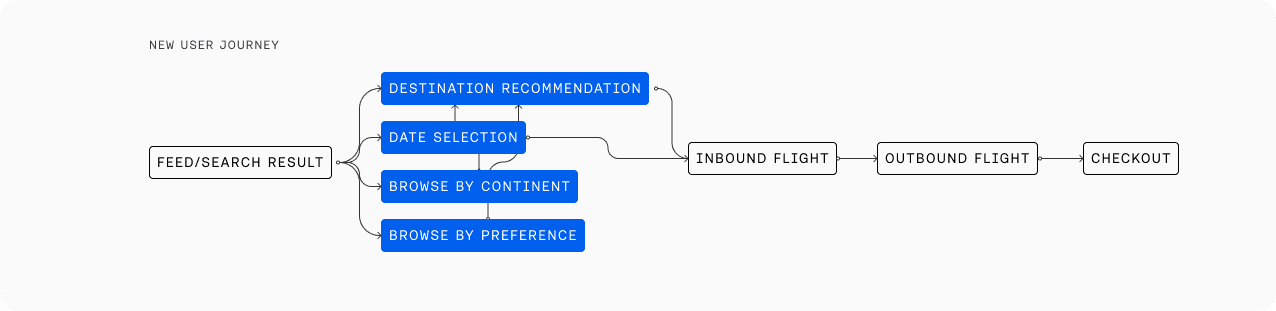
A user journey that focuses on discovery
First, I iterated on the entry point of the new search experience – users encounter a search box that allows them to search without entering a date. The area below the search box is populated with a feed for free exploration.
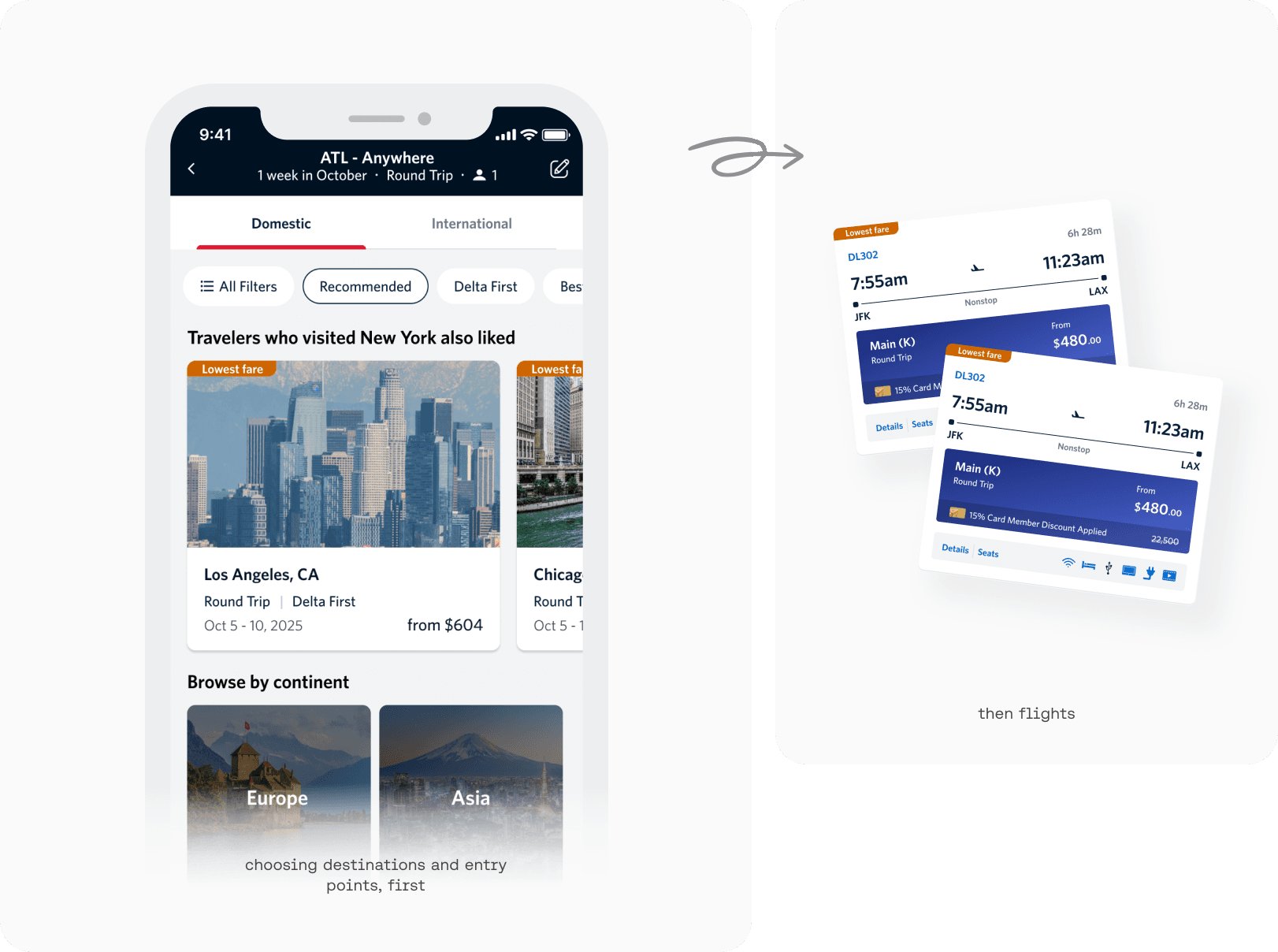
Explore rabbit holes of dates and destinations
Whereas the original search experience consisted of a rigid structure going from destination to checkout, a more flexible experience accomodates for various intents by showing various kinds of results

DECISION #2
A dynamic framework for capturing and shaping user intent
Dynamic Header Design — I turned the static header component into a dynamic one that changes according to the flexible dates / destinations entered by the user.
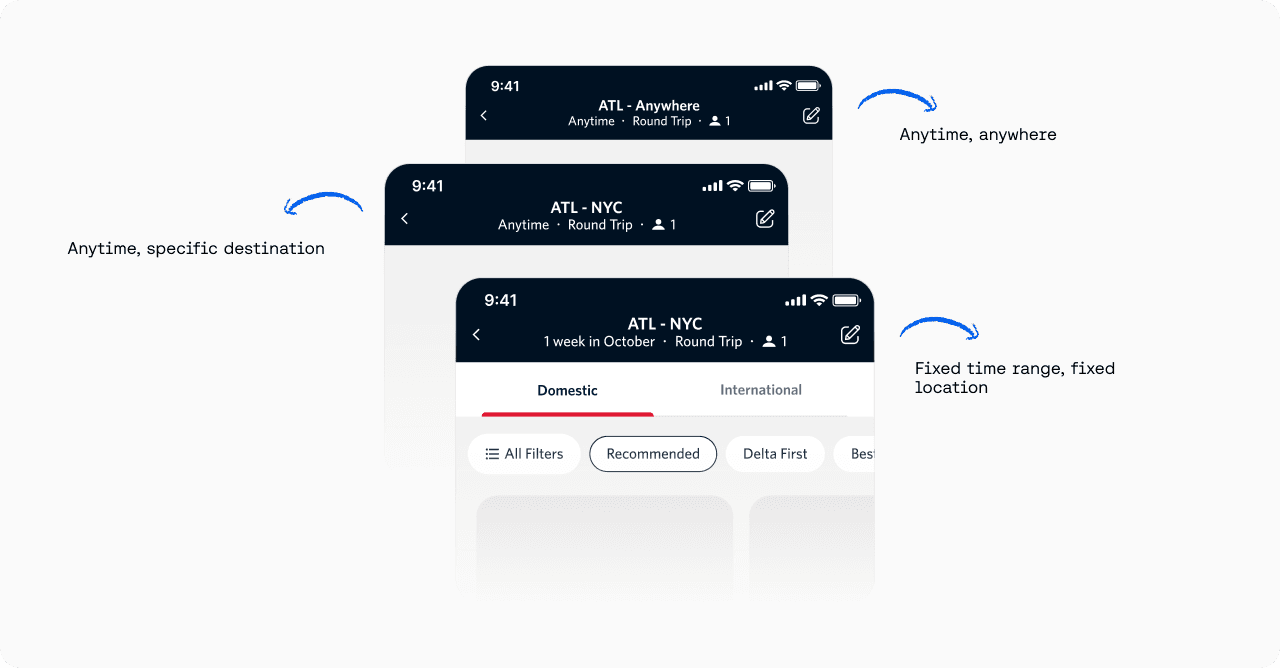
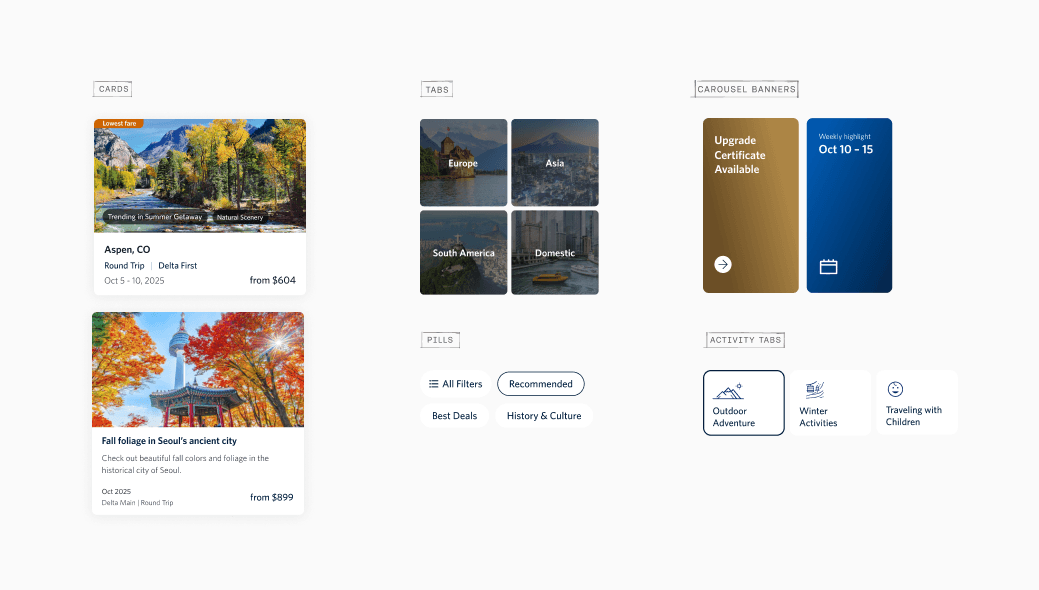
Framework for displaying search results — I defined how atomic elements populate the page depending on the intent. This approach allows the algorithm to respond to specific needs presented by different and diverse types of users.
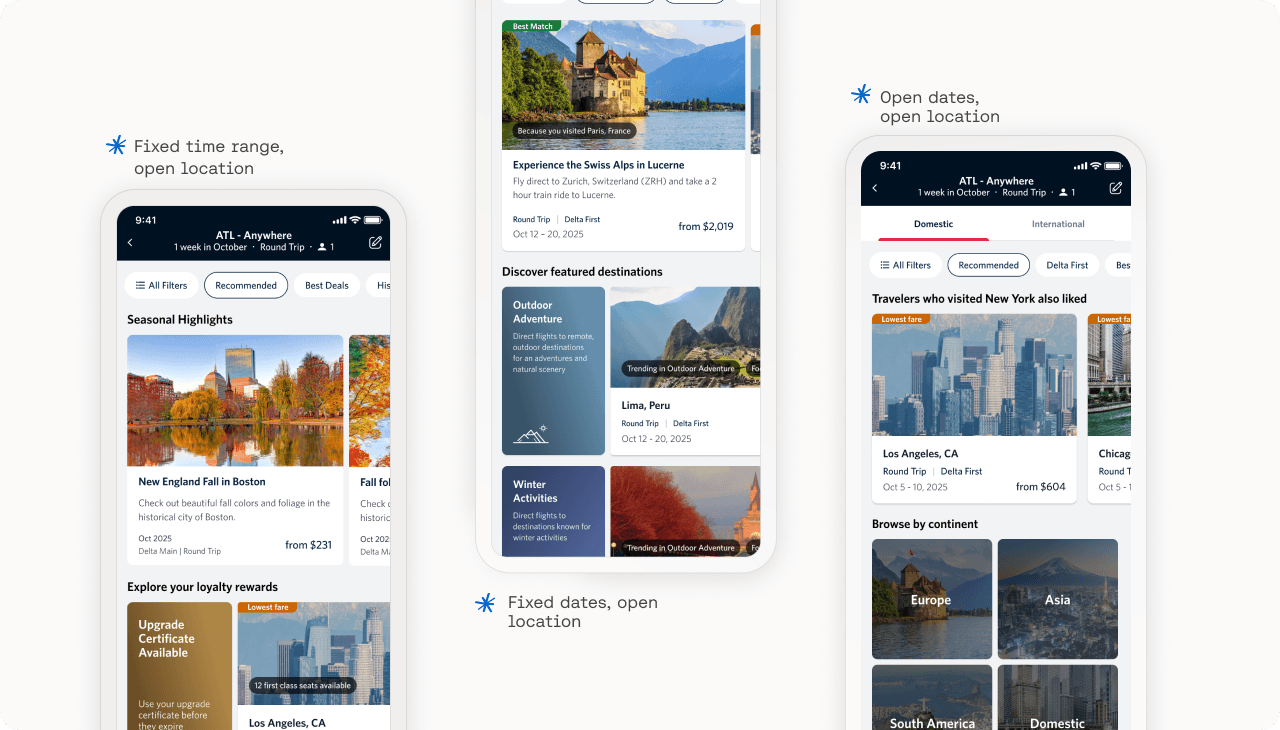
Atomic design for flexible search — Atomic elements provide flexibility for populating the search result page.
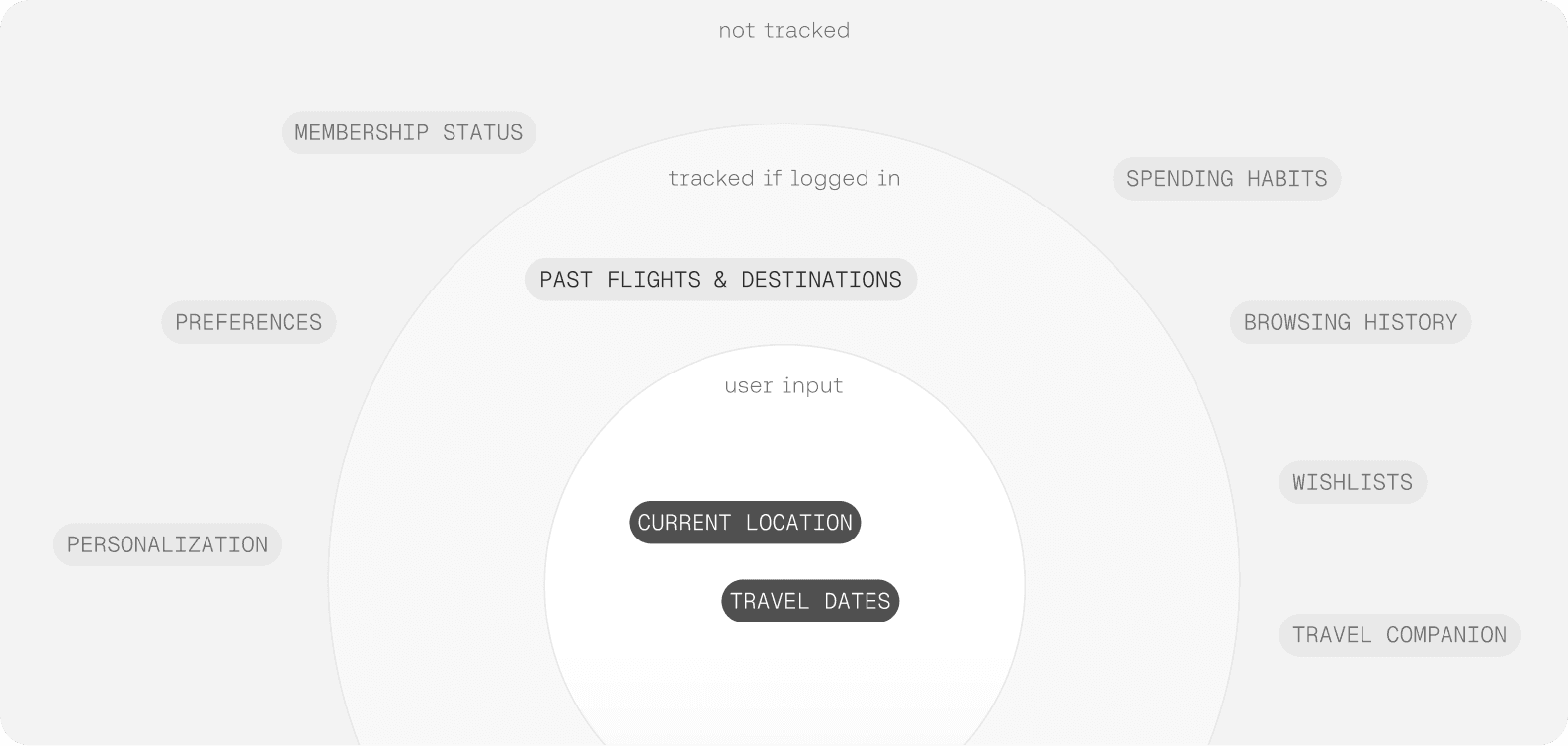
DECISION #3
Personalizing through context, not data
Overcoming lack of data — Delta does not have sufficient data to build up a personalization algorithm. What does personalization look like in this case?
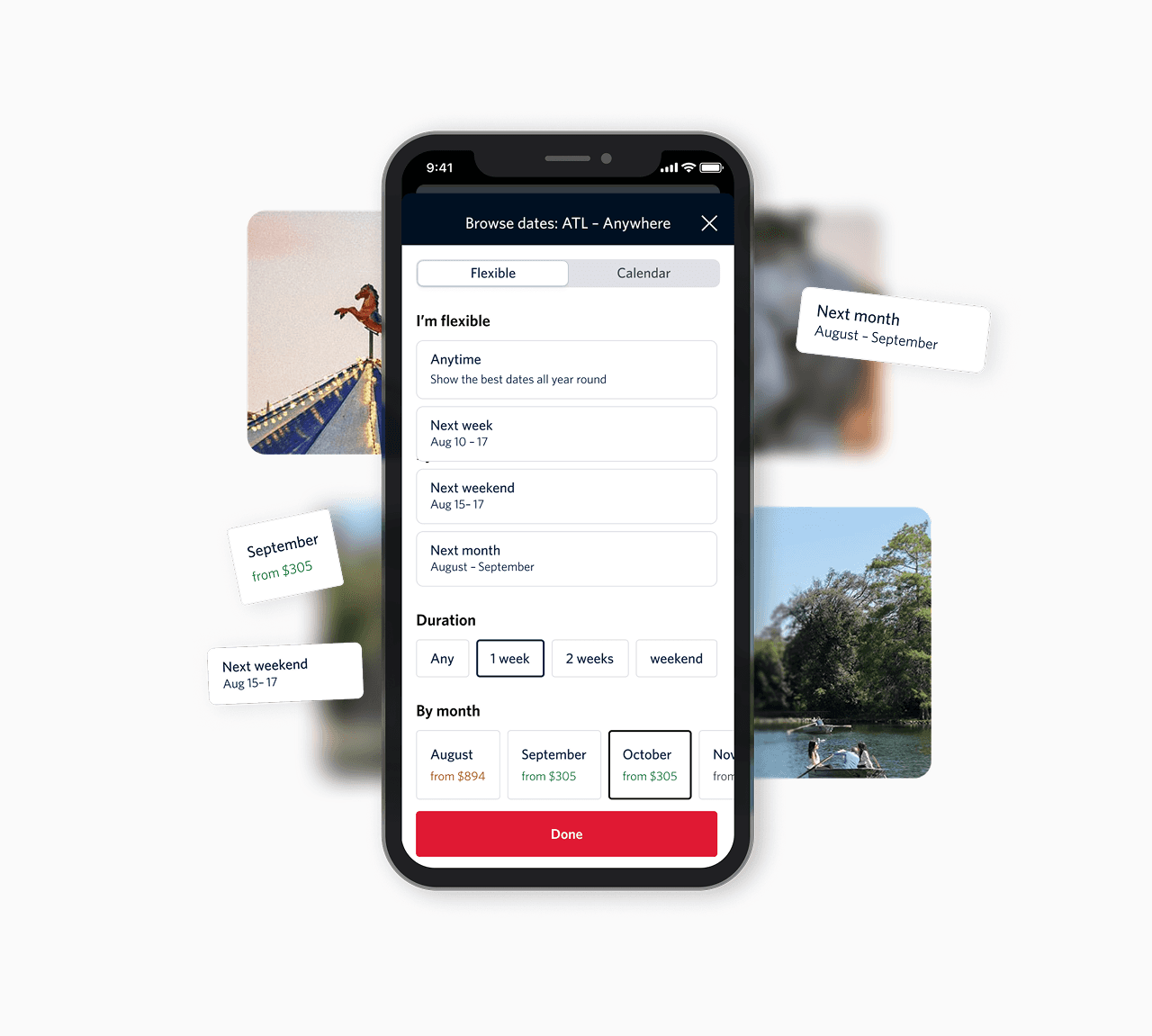
Contextualizing based on destination — Utilizing publicly available APIs and destination-related data, we could potentially surface better date suggestions when users look up a specific destination.
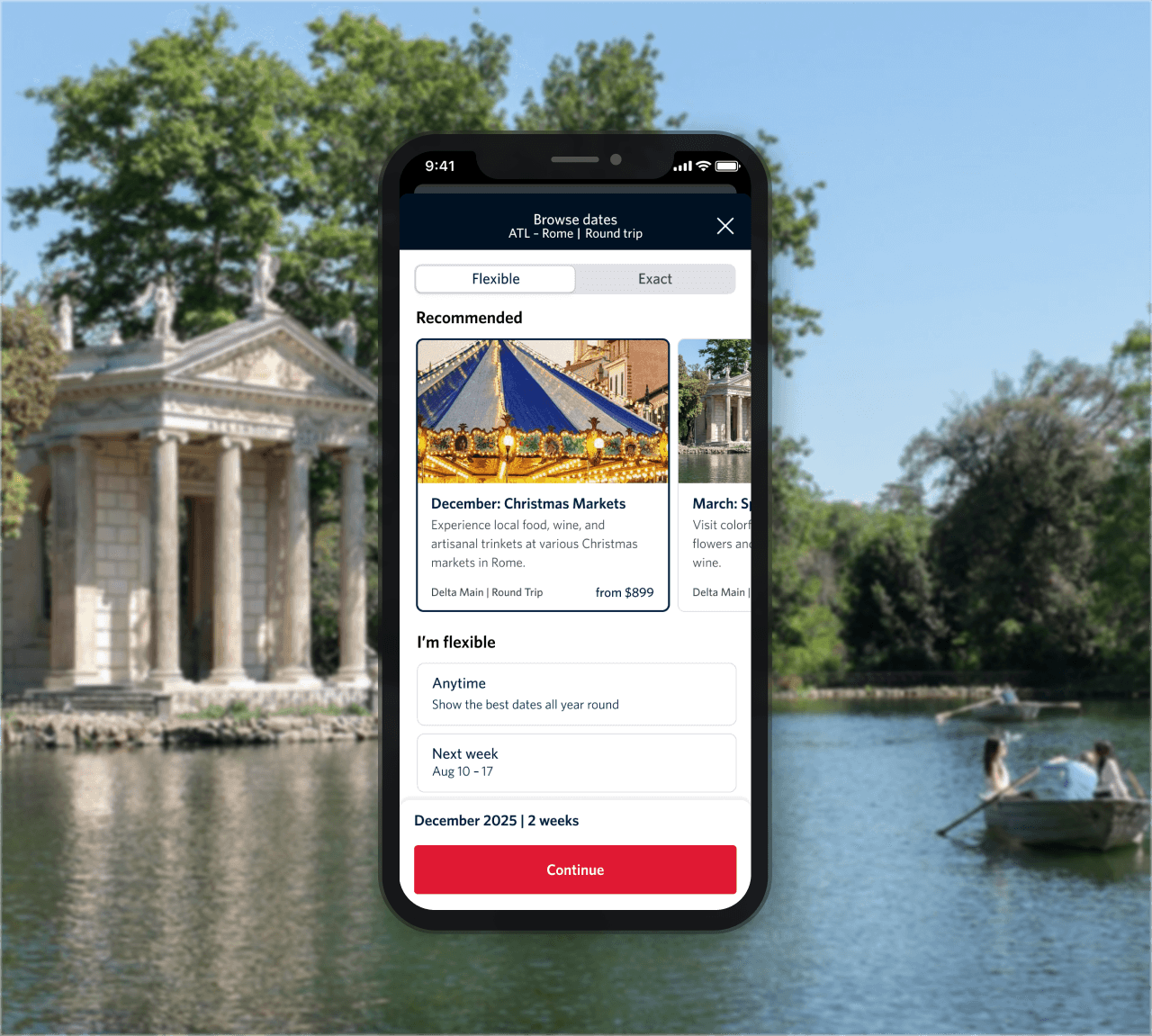
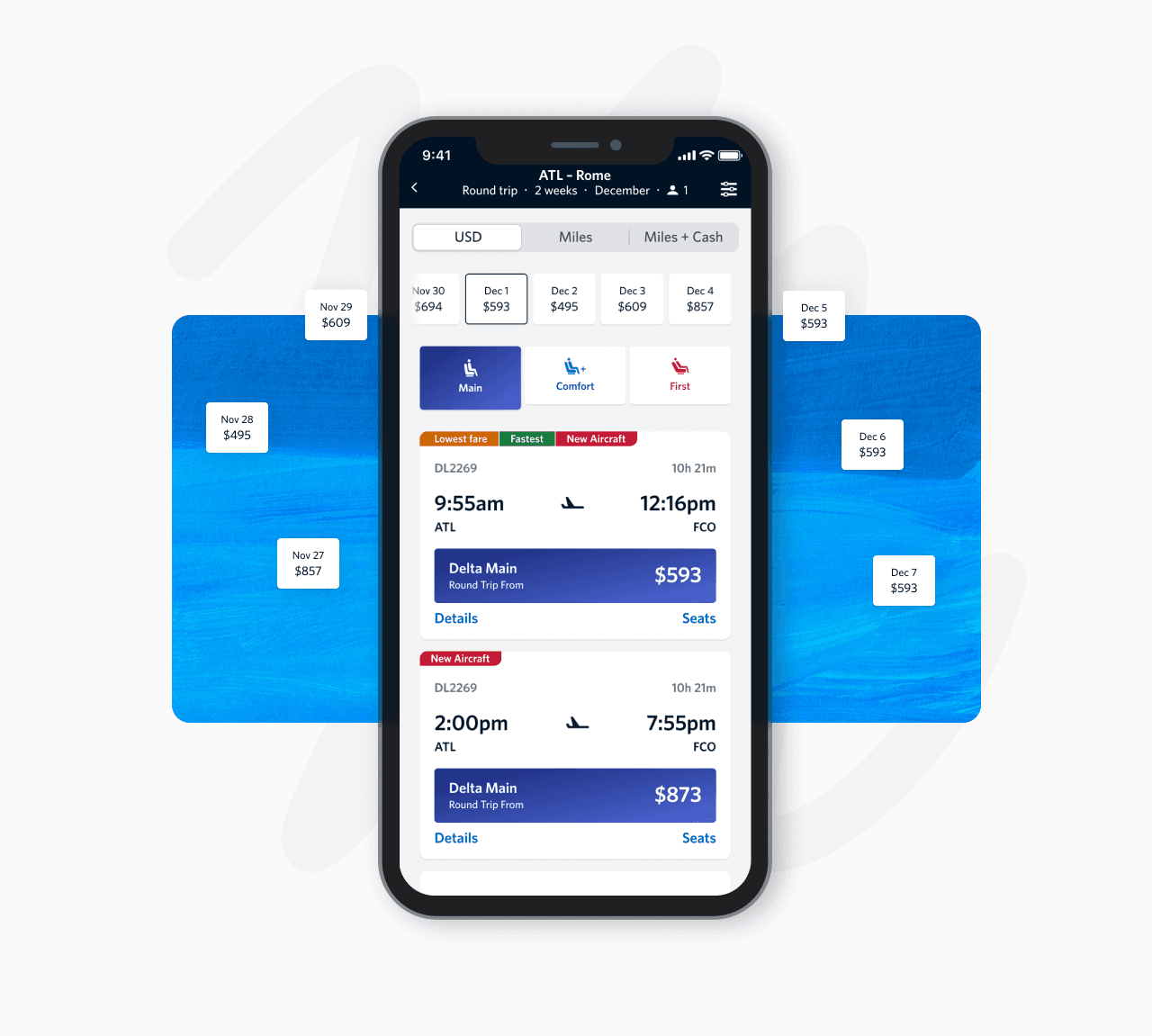
Flexible price suggestions — Surfacing ticket cost at the right moments help users make up their mind about travel date and destination, turning them from hesitant explorers to confirmed travelers.
DECISION #4
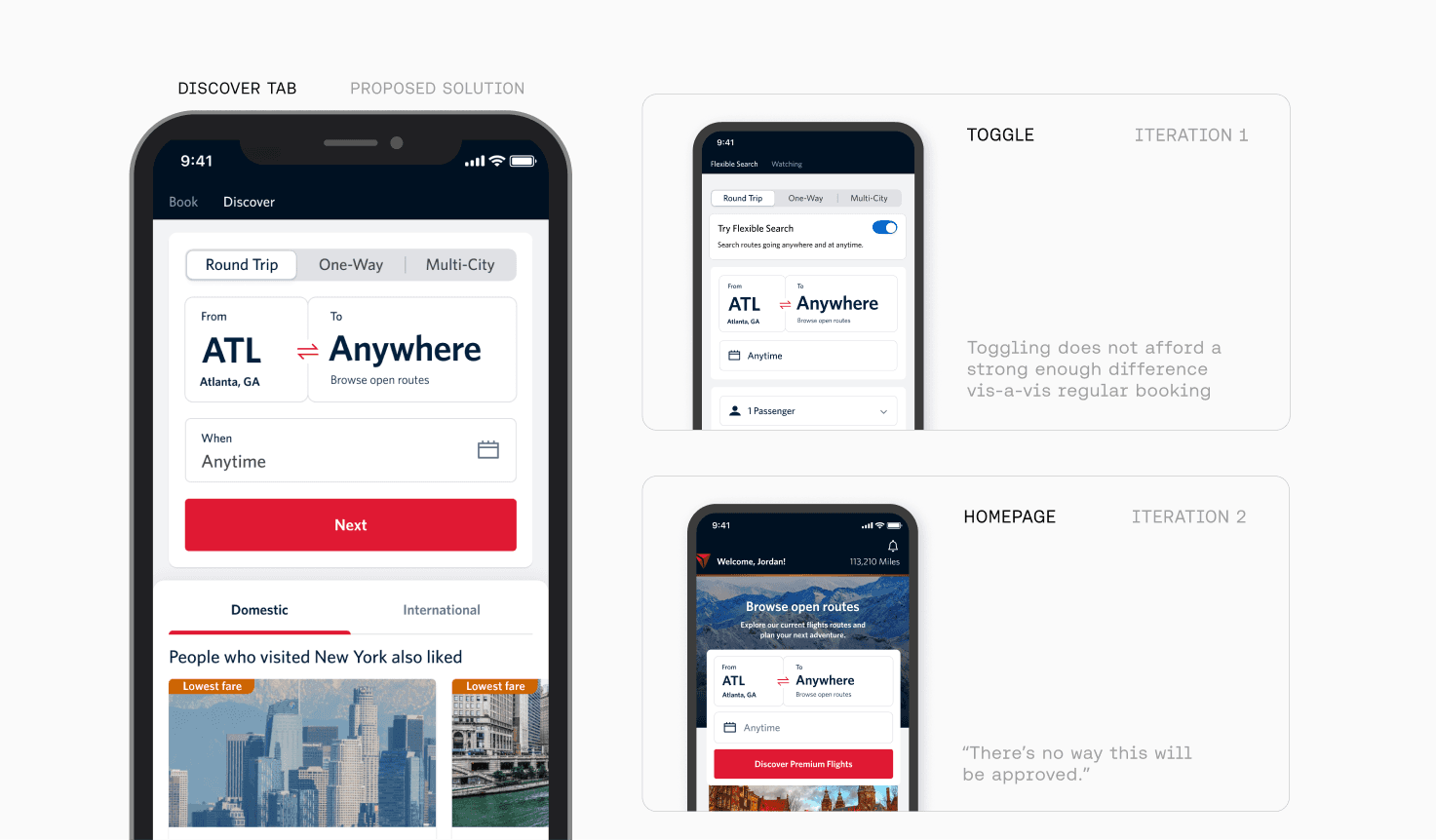
Where should this feature live? How do we introduce it to users?
Balancing business constraints — There are already many features in the FlyDelta app; I explored what would a smooth rollout of flexible search experiences look like?
DECISION #5
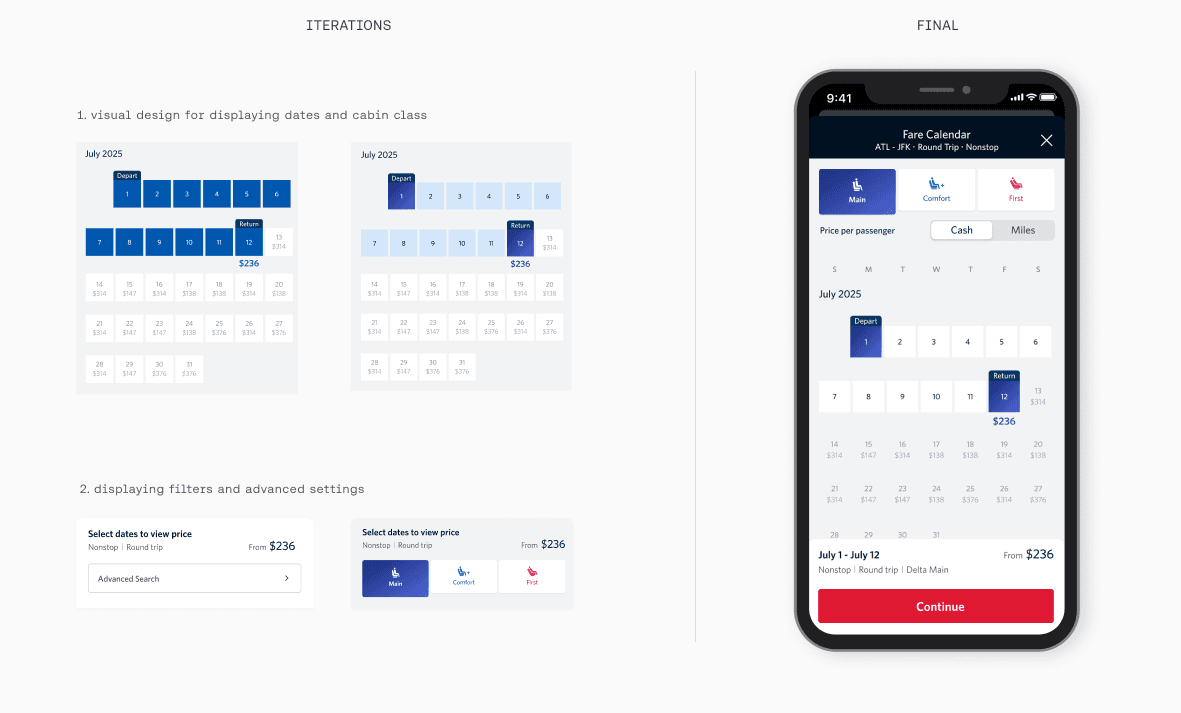
Designing the infrastructure for flexibility
Introducing the Fare Calendar — The fare calendar is a common feature in other platforms for flexible travelers; I designed Delta's version
03 impact & reflection
Some reflections and takeaways…
Planting the seed for flexible search
While a self-initiated project completed in a short amount of time, Flexible Search and Personalization received positive feedback up to the director level because of how I leveraged storytelling and stakeholder engagement to create compelling value.
Balancing baby steps with long-term vision
One of the biggest challenges in this project is scoping and pushing for innovation rather than being solely bogged down in short-term fixes. I made sure